Reproductive Health Sexual and Reproductive Health
A Guide to Female Back Anatomy
From lifting groceries to carrying a child, the back is central to nearly every move we make. Yet, many of us don’t think much about it until something goes wrong. Understanding your back’s structure is the first step toward preventing pain and maintaining a strong, healthy body throughout your life. For women, this is particularly important, as hormonal changes, pregnancy, and certain health conditions can have a unique impact on back health.
This guide explores the essentials of female back anatomy, from the intricate network of bones and muscles to the common issues that can arise. We will also cover practical exercises and preventative tips to help you build a resilient back. By learning more about how your back works, you can take proactive steps to support its health and function for years to come.
The Structure of the Female Back
The back is a complex and powerful structure composed of bones, muscles, nerves, and connective tissues, all working together to provide support, stability, and movement. While the fundamental anatomy is similar between sexes, women experience unique physiological factors that can influence their back health.
The Spine: Your Body’s Central Pillar
The spine is the core of your back, providing both rigid support and flexible movement. It consists of 33 vertebrae stacked on top of each other, divided into five distinct regions:
- Cervical Spine (Neck): The top seven vertebrae (C1-C7) support the head and allow for a wide range of motion.
- Thoracic Spine (Mid-Back): The next 12 vertebrae (T1-T12) connect to the rib cage, providing stability for the torso.
- Lumbar Spine (Low Back): The five largest vertebrae (L1-L5) bear most of the body’s weight, making this area particularly susceptible to pain and injury.
- Sacrum: Five fused vertebrae that connect the spine to the hip bones.
- Coccyx (Tailbone): Four fused vertebrae at the very base of the spine.
Between each vertebra lies an intervertebral disc, a cushion-like pad that absorbs shock and allows for slight movement. These discs are crucial for spinal flexibility and protecting the vertebrae from grinding against each other.
The Muscles of the Back
A sophisticated network of muscles supports the spine and facilitates movement. These can be grouped into three main layers:
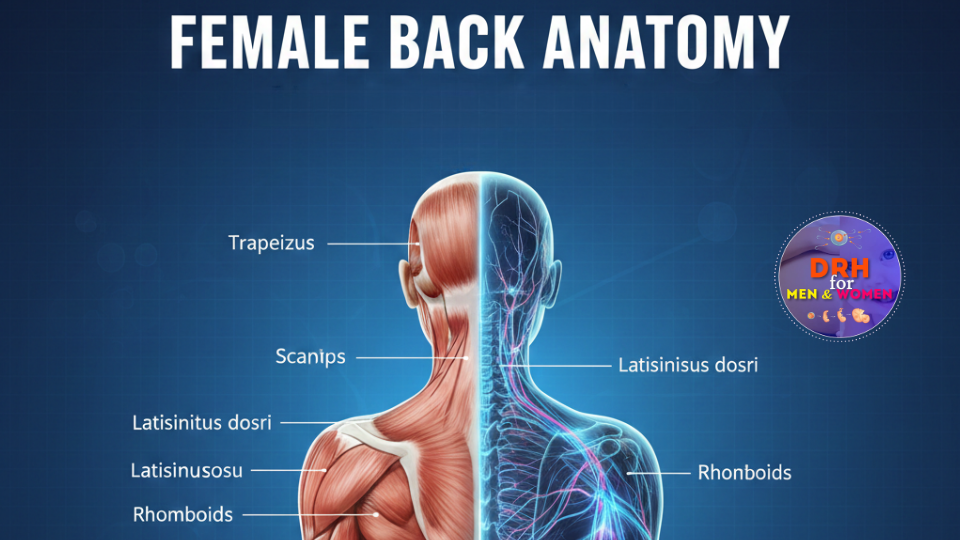
- Superficial Muscles: These are the largest muscles, including the latissimus dorsi (lats) and the trapezius (traps). They are responsible for large movements like pulling your arms down and back or shrugging your shoulders.
- Intermediate Muscles: This group includes the rhomboids and serratus posterior muscles, which assist with shoulder blade movement and respiration.
- Deep Muscles: The deep or intrinsic muscles, such as the erector spinae and multifidus, run along the length of the spine. They are essential for maintaining posture and stabilizing the individual vertebral segments. Strong deep muscles are a cornerstone of good women’s back health.
Ligaments and Tendons
Ligaments are strong, fibrous bands that connect bones to other bones, providing stability to the joints of the spine. Tendons, on the other hand, connect muscles to bones. This entire system works in harmony to protect the spinal cord, which runs through a central canal in the vertebrae, transmitting nerve signals between the brain and the rest of the body.
Common Back Problems Affecting Women
While men also experience back issues, certain factors make women more prone to specific types of back pain. Understanding the causes is key to prevention and effective treatment.
Causes of Female Back Pain
Several conditions and life stages can contribute to back pain in women:
- Hormonal Changes: Fluctuations in hormones, particularly during the menstrual cycle, pregnancy, and menopause, can affect the laxity of ligaments, potentially leading to instability and pain.
- Pregnancy and Postpartum: The physical demands of pregnancy—including weight gain, a shifting center of gravity, and the hormone relaxin loosening ligaments—place significant strain on the lumbar spine. This strain can persist postpartum as mothers frequently lift and carry their growing children.
- Osteoporosis: Women are at a higher risk of developing osteoporosis, a condition that causes bones to become weak and brittle. This can lead to painful vertebral compression fractures.
- Postural Stress: Habits like carrying heavy handbags on one shoulder, wearing high heels, or having a larger bust size can create muscular imbalances and place uneven stress on the back.
Common diagnoses associated with female back pain include degenerative disc disease, sacroiliac (SI) joint dysfunction, and myofascial pain syndrome.
Exercises for a Healthy Back
A proactive approach to women’s back health includes regular exercise to strengthen supportive muscles and improve flexibility. These back exercises for women are simple to perform and highly effective.
Strengthening Exercises
- Bird-Dog: Start on all fours with your hands under your shoulders and knees under your hips. Engage your core and extend your right arm forward and your left leg backward, keeping your back flat. Hold for a few seconds, then return to the start. Alternate sides. This enhances core stability and balance.
- Glute Bridges: Lie on your back with your knees bent, feet flat on the floor, and arms by your sides. Squeeze your glutes and lift your hips toward the ceiling until your body forms a straight line from your shoulders to your knees. Hold, then lower slowly. This strengthens the glutes and lower back.
- Plank: Position yourself on your forearms and toes, keeping your body in a straight line from head to heels. Engage your abdominal muscles and hold for 30-60 seconds. The plank is excellent for building deep core strength, which is vital for supporting the spine.
Stretches for Flexibility
- Cat-Cow Stretch: On all fours, inhale as you drop your belly and look up (Cow Pose). Exhale as you round your spine, tucking your chin to your chest (Cat Pose). This gentle movement increases spinal flexibility.
- Child’s Pose: Kneel on the floor, sit back on your heels, and fold forward, resting your forehead on the ground with your arms extended in front of you. This pose gently stretches the entire length of the back.
- Knee-to-Chest Stretch: Lie on your back and gently pull one knee toward your chest, holding for 20-30 seconds. Switch legs. This stretch helps release tension in the lower back and hips.
How to Protect Your Back
Beyond exercise, simple lifestyle adjustments can make a significant difference in preventing female back pain.
- Practice Good Posture: Whether sitting or standing, keep your spine aligned. Shoulders should be back, chest open, and head balanced directly over your shoulders.
- Lift Safely: When lifting heavy objects, bend at your knees, not your waist. Keep the object close to your body and use the power of your legs to lift.
- Choose Supportive Footwear: Limit the use of high heels, as they can alter your body’s alignment and strain your lower back.
- Maintain a Healthy Weight: Excess body weight, especially around the midsection, puts added stress on the lumbar spine.
- Optimize Your Workspace: If you work at a desk, ensure your chair, monitor, and keyboard are positioned ergonomically to support a neutral spine posture.
Take Charge of Your Back Health
Your back is an incredible feat of natural engineering, but it requires care and attention to function at its best. By understanding female back anatomy, recognizing potential issues, and adopting healthy habits, you can build a strong, pain-free back that will support you through all of life’s activities. Don’t wait for pain to be your motivator—start taking proactive steps for your back health today.