Reproductive Health Sexual and Reproductive Health
Female Abdominal Anatomy: A Complete Guide to Core Structure
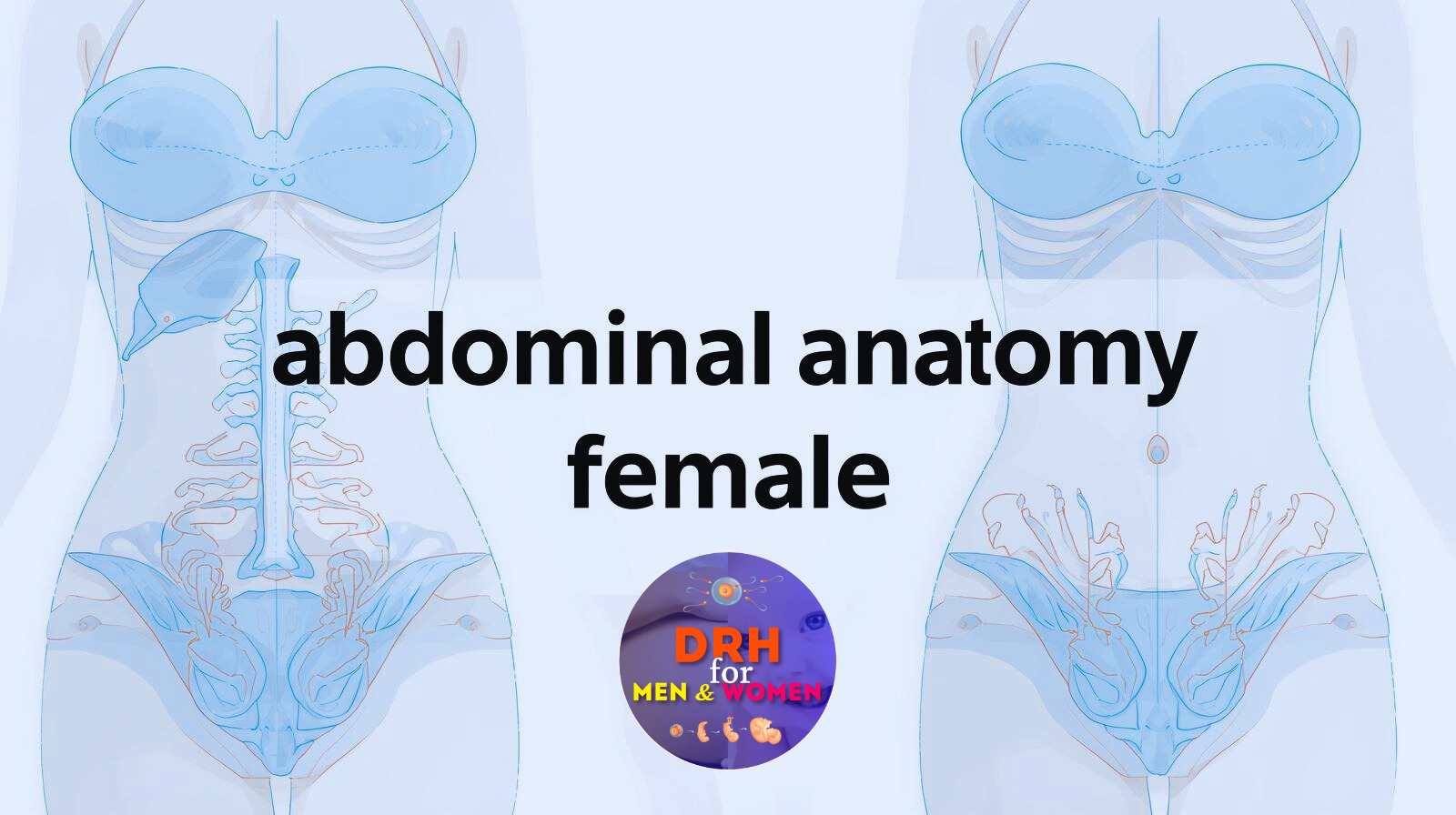
The female abdomen is a complex system of muscles, organs and connective tissues that contributes to daily movement, posture and general health. Knowing the structure of the abdominal anatomy around your belly means women can knowledgeably choose a workout regimen, catch warning signs in their health or understand and anticipate just how versatile her body is.
The female abdominal anatomy varies significantly from male in terms of how the muscles are affected by hormonal fluctuations, pregnancy and childbirth.” These disparities influence everything from muscle fiber composition to how core muscles recover after exercise.
This ultimate guide delves into the complex layers of female abdominal muscles, their unique traits, crucial functions, what they can endure and practical tips to optimize their health through various life stages.

Garden of Life Organics Women’s Multivitamin – A Daily Boost for Your Health & Beauty!
Looking for a powerful once-daily multivitamin that supports your energy, immunity, hair, skin & nails?
This Garden of Life Organics Women’s Multivitamin is made from real whole foods, packed with nutrients your body actually absorbs!
Why women love it:
✔ 15+ essential vitamins & minerals (100% DV or more)
✔ Includes Iron, Biotin, Vitamin D3, B12, Folate (not synthetic folic acid)
✔ Supports radiant skin, strong nails & healthy metabolism
✔ Made from real organic fruits, veggies & herbs
✔ 100% Vegan, Non-GMO, Gluten-Free & Kosher
✔ Just one tablet a day!
Perfect for women who want natural, clean, and effective daily nutrition.
👉 Check it out here: Order Now
Overview of Abdominal Muscles
The female abdomen is made up of four major muscle groups that function together as a powerful core system.
Rectus Abdominis
The rectus abdominis arises from the most superficial layer of abdominal muscles, and is found in front of the lower abdominal wall. In a woman, these two muscles stretch from the pubic bone up to beneath the breasts and are divided in half by a strip of connective tissue called the linea alba.
Women’s rectus abdominis muscles are generally a little shorter and wider than men\’s due to hormones that affect muscle tone and definition. Conconnective tissue divides the muscle fibers into compartments and when well formed, these bands produce a compartmentalized appearance.
External Obliques
The external obliques are the largest and most superficial (outermost) of the side abdominal muscles. They arise from the lower eight ribs and insert into the iliac crest and pubic tubercle. The external obliques are responsible for the rotation and side bending of our trunk, while also being major contributors to core stability.
The external obliques are important in female abdominal muscles as they contribute to the support of the pelvic floor muscles, especially when a woman is pregnant and extra support is needed for the uterus.
Internal Obliques
Situated under the external obliques, the internal obliques have a different running direction to both their external counterpart and the other abdominal muscles. They are attached to the inguinal ligament, iliac crest and thoracolumbar fascia and inserted into the lower ribs and linea alba.
Internal Obliques The internal obliques play a significant part in rotation and stability of the spine, while working directly along eye to eye with their external counterparts. In females particularly, these muscles undergo dramatic changes in pregnancy and are stretched to accommodate fetal growth without losing their core purpose.
Transverse Abdominis
The deepest of the abdominal muscles, the transverse abdominis serves as a natural corset for your midsection. It arises from inguinal ligament, iliac crest, thoracolumbar fascia and the costal cartilages of the last six ribs.
The transverse abdominis is especially important in women’s abdominal anatomy since it helps stabilize the pelvic organs and is a close pal of the pelvic floor muscles. This muscle fire on before others since, allowing your stabilisation pre-empting the movement.
Key Anatomical Differences in Female Abdominal Structure
Female abdominal anatomy differs from male’s in a variety of respects, with correlation between the former’s function and appearance.
Pelvic Structure Impact
By comparison, the female pelvis is wider with a C-shape and tilted forward at a different angle than males, which influences how abdominal muscles attach and work. This broader pelvic girdle changes the orientation at which the rectus abdominis runs, which could theoretically influence muscle activation patterns and exercise efficacy.
Hormonal Influences
Abdominal muscle structures are directly affected by female hormones, especially oestrogen and progesterone. These hormones impact the distribution of muscle fiber type, the speed of recovery and a propensity for fat storage in the abdomen.
“Hormonal changes (versus muscle memory) affect tension and flexibility during menses. Appreciating these patterns of activity contributes to optimizing training, and understanding the response pattern may also be valuable for identifying normal variation in core function.
Pregnancy Adaptations
The female abdomen is a very adaptable under the impact of pregnancy. The rectus abdomini can split down along its lien albas in term to allow the space needed for the pregnant uterus – a phenomenon known as diastasis recti. This disconnection is a natural adaptation however, and must be accounted for in rehabilitation of the post-partum period.
The tubal alignment along with transverse abdominis and pelvic floor muscles also suffer considerable modification in pregnant females and may need targeted exercises to re- fine their functioning after delivery.

Nature Made Hair, Skin & Nails with Biotin Your Daily Beauty Boost!
Looking for a supplement that helps keep your hair, skin, and nails healthy from within?
This premium Biotin formula from Nature Made can be your perfect daily support!
✔ Key Benefits:
-
Contains 2500 mcg of Biotin to support thicker, stronger hair
-
Vitamin A & C help maintain healthy, glowing skin
-
Supports stronger, less brittle nails
-
Supports energy metabolism and nervous system function
-
Gluten-free, no synthetic dyes, no artificial flavors
-
USP Verified – trusted quality
How to Use:
Take 1 softgel daily with water and a meal.
🛒 Product Link: Order Now
Essential Functions of Female Abdominal Muscles
Abdominal muscles in women have a few essential new purposes much beyond just being aesthetically pleasant.
Core Stability and Spinal Support
Women’s abdominal muscles are designed to stabilize the spine and pelvis. These all work in unison to keep your spine aligned properly while you are moving as well as at rest. The deep stabilizing muscles, especially the transversus abdominis, contract all the time to give you this fundamental support.
When the core is stable, it alleviates back pain and prevents injury, and increases movement efficiency overall. This role becomes especially critical for women who suffer changes in spinal alignment due to pregnancy or postural habits.
Respiratory Function
Abdominal muscles contribute significantly to expiration, especially during forced expiration. The muscles contract the abdominal cavity, pushing the diaphragm upward and assisting in expelling air from the lungs. This feature is useful for those using powerful breathing in activities such as singing, playing wind instruments, or intensive exercise.
Movement Generation
The performer’s trunk muscles are responsible for movement generation and control during flexion, rotation and lateral flexion of the trunk. These are key moving patterns that we perform throughout the day when reaching, lifting and repositioning. The stronger your abs, the better you move and the less compensatory patterns to get hurt.
Pelvic Floor Support
In women’s abdominal anatomy, the lower abs and transversus-abdominis work as an internal corset with the pelvic floor muscles to lift pelvic organs up off their backrests and keep everything continent (dry versus moist). The transverse abdominis in particular is highly associated with the pelvic floor action, and synchronized contractions are necessary for efficient pelvic health.
Common Abdominal Issues in Women
There are also some abdominal problems which occur more commonly in women owing to their anatomical and physiological make up of the abdominal cavity.
Diastasis Recti
Diastasis recti arises when the rectus abdominis muscles divide along the linea alba. It’s more frequent after pregnancy, but may also occur due to too much pressure on the abdomen, poor exercise form or genetics.
This condition may result in a noticeable bulging of the central abdomen and can be accompanied by back pain, pelvic floor dysfunction or decreased core stability. Good thing, the right diagnosis and exercises can really help you!
Pelvic Floor Dysfunction
Given the interconnectedness of abdominal muscles and pelvic floor, abdominal weakness or dysfunction can add to pelvic floor issues. These may be urinary incontinence, pelvic organ prolapse and others.
Concurrent abdominal and pelvic floor rehabilitation is frequently required in order to treat these related aspects adequately.
Effective Exercises for Female Abdominal Strengthening
Italian round panty muffin top belly workout Italian6pac abdomen woman navel muscles Although women gain the same benefits from abdominal exercises as do men, women have specific concerns that their male counterparts do not.
Deep Core Activation
Start with some deep stabilizing muscles exercises. The diaphragmatic breathing with gentle TA activation is the low-level activity training for core stability. Repeat pulling your navel lightly towards your spine while breathing normally.
Dead bug exercises and modified planks will also help to develop subtle inward stability. And establish better muscular coordination and meridian flow.
Progressive Strengthening
As that proper activation is comfortable, move to more difficult exercises such as planks, side planks, and bird dogs. They work many of the muscle groups in your abdomen and begin by stabilizing the spine.
Exercises that use twisting motion like wood chops and Russian twists help work the oblique muscles, but are to be done with caution in order not to put too much pressure on the spine.
Functional Integration
Include functional work that you perform as part of your daily biomechanics with abdominal strength. Squats, lunges and toting enhance core muscles as they stabilize. The body during movement of legs and arms for better power and understanding of how things work.

Bronson Vitamin K2 + D3 – The Perfect Duo for Strong Bones & Better Health!
If you’re looking for a supplement that actually works, this Bronson Vitamin K2 (MK7) + D3 combo is one of the best you can get! These two vitamins are scientifically proven to work better together, helping your body absorb calcium properly and send it exactly where you need it your bones.
Why this supplement stands out:
✔ Perfect Pairing: Vitamin D3 boosts calcium absorption, while Vitamin K2 (MK-7) ensures calcium goes to your bones not your arteries.
✔ Supports Strong Bones & Heart Health
✔ High Potency: 5000 IU D3 + 90 mcg K2 per capsule
✔ Pure & Clean Formula: Non-GMO, Gluten-Free, Soy-Free
✔ Easy-to-swallow capsules
✔ Trusted Brand Since 1960
If you want healthier bones, better calcium support, and a reliable daily supplement, this is a must-have addition to your routine.
👉 Check it out here: Order Now
Building Long-Term Abdominal Health
When she knows her female abdominal anatomy. This enables the ladies to do what is best for their core health as well as “down there” after childbirth. During pregnancy or just during your everyday life. The distinct nature of the female abdominal muscle means that exercises used. The manner in how they should be progressed and rest times will differ between men.
Monitoring of core function at regular intervals (particularly in the postpartum period or following hormonal changes) allows for early detection of any potential issues. Training with certified fitness professionals or physical therapists will help to create exercise programs. That target specific needs while taking into account the complexity of female anatomy.
Strong core abdominal muscles give you better posture, less back pain, and more athletic performance in everything you do – not to mention a higher quality of life! Understanding the incredible versatility and complexity of female abdominal anatomy allows women to devise better plans for optimal ‘core’ health over the course of their life.