Reproductive Health Sexual and Reproductive Health
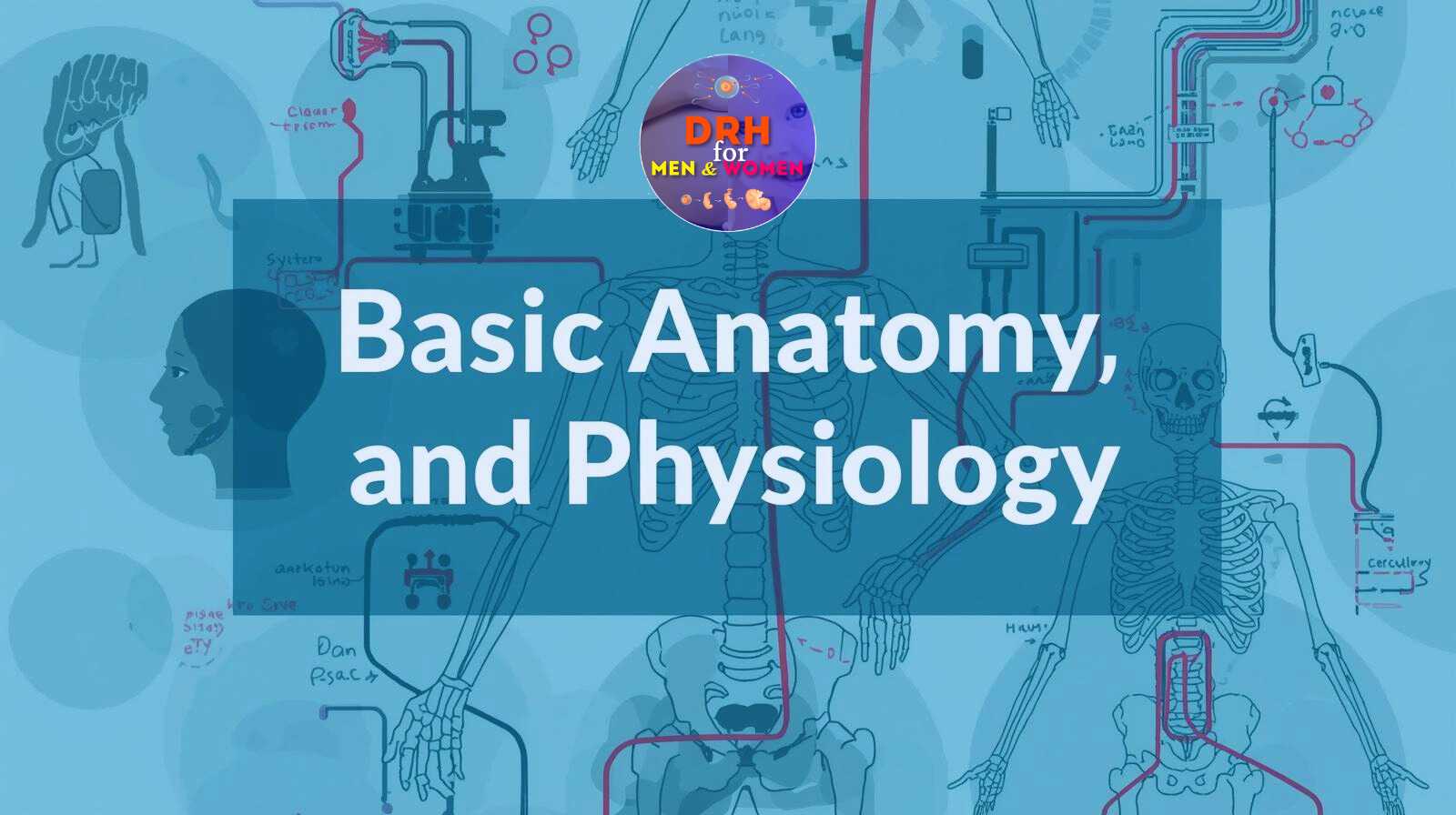
A Beginner’s Guide to Basic Anatomy and Physiology
Want to know how your body works? (Even just as a marvel of structure and function — from breathing to thinking you’ve got enough surface area inside your skull to cover with blood vessels and nerve endings to wrap around a decently sized bean dip bowl. Anatomy and Physiology This intricate dance is the subject of two closely related areas: anatomy and physiology.
Anatomy is to the body’s structures what physiology is to how those structures work. Think of it this way: anatomy is the map of the body that reveals all its parts and where they can be found. Physiology, on the other hand, describes what that map is doing: the systems of keeping you alive and sending you out the front door.
Anatomy and physiology are not solely for future health professions students. You have unprecedented visibility into your own health, so that you can make informed decisions about diet, exercise and wellness. So this guide will lead you from the littlest chemical building blocks to the largest organ systems that work together in order to run this remarkably fun machine for us.
The Body’s Levels of Organization
The human form is a marvellous arrangement; it’s hierarchical, and builds up in layers from the simple to the complex. This idea of tiers is fundamental when it comes to deciphering what full stack means for a system.
Chemical Level
It goes back to the chem. The body is composed of atoms, the smallest particles of matter, which are put together to form molecules. These molecules — water, proteins and fats–are the basic components of all structures and functions in mom’s organism.
Cellular Level
Cells—the smallest structural and functional unit of a living organism Molecules form cells. Every cell also has discrete structures called organelles, such as the nucleus (the cell’s command center) and mitochondria (its energy factories). There are trillions of cells in the human body, each with specific jobs to do.
Tissue Level
Tissues are collections of similar cells that cooperate with each other in carrying out a particular function. The human body is comprised of four basic types of tissue:
- Epithelial tissue: This is the type that lines surfaces of your body, such as cavities and organs, and which makes up your glands.
- Connective: Provides support and protection to organs and other tissues. There are, of course, such types as blood tissue and bone cartilage.
- Muscle: Body tissue that acts upon or moves the contents of the organ.Muscle activity may be recorded in multiple ways.
- Nervous: Makes and moves nerve impulses to control body functions.
Organ and System Levels
An organ is a structure composed of two or more distinct tissues and performs a specific function. For instance, the heart, lungs, brain and stomach are all organs. The organs, in turn, join together to function as organ systems. For example, the digestive system consists of the stomach, intestines, and liver, which all cooperate in breaking down food into its component parts. The body then absorbs nutrients from these parts.
Organismal Level
And all the organ systems of the body work together to produce life and health — of the organism, which is just another way of saying, the whole individual that’s alive. This is what holds us together to behave as one company.
Key Body Systems Explained
In your body you have different “organ systems” each serving a specific purpose. These are some of the key systems that keep you running.
- Skeletal System: Your body structure consists of bones, cartilage and joints. It supports, protects organs, allows movement and manufactures blood cells.
- Muscles System: It comprises the body’s collection of skeletal, smooth and cardiac muscles and is in charge for motion, maintenance of posture, and heat generation.
- Nervous System: The nervous system is the body’s control center formed by the brain, spinal cord, and nerves. It controls and coordinates all functions within the body, makes sense of its environment, and records life events as awareness, memory and feeling.
- Endocrine System: Glands produce hormones, which are powerful natural chemicals that control many different activities such as growth, metabolism and reproduction.
- circulatory system: BLOOD and blood VASCULATURE. Its role is to pump blood around your body so that the cells receive oxygen and nutrients, and waste products can be removed.
- Breathing: Lungs and respiration; breathing in oxygen and exhaling carbon dioxide.
- Digestive: It breaks food down into nutrients the body can use for energy, new growth and cell repair. It includes the stomach, liver and intestines.
- Urinary System: Your kidneys, bladder, and ureters collaborate to filter waste from your blood and dispose of it in the form of urine.
Homeostasis: Maintaining Internal Balance
Physiology Homeostasis is the paramount aspect of physiology. That is the body’s capacity to maintain a stable, constant internal environment when everything on the outside changes. Think of it as your body’s internal thermostat. For example, when you become overheated your body sweats to help cool itself. When you are cold, you shiver in order to get warm. These are homeostatic mechanisms to fend off what is in fact quite a narrow range of ideal core body temperature. Homeostasis is a critical aspect in the working of every cell and tissue.
The Language of Anatomy
To avoid that confusion, scientists refer to a standard set of terms for the body. Though it can feel a bit like learning a new language, you really don’t need to know many terms.
- Directional terms: Indicates location of a body part in relation to another. For example superior- “towards the head” (the head being superior to the chest) and inferior towards feet. The anterior is front of the organism and posterior is back.
- Body Planes: imaginary flat surfaces that pass through your body. It is bilaterally symmetrical with right and left halves. It is partitioned into front and back portions by the frontal (coronal) plane. The transversal plane divides the body into upper and lower portions.
Fundamental Physiological Processes
Physiology explores the “how” of the body. Here are a few core processes:
- Cellular Respiration: How your cells produce energy (ATP) from the food you eat. It’s a fundamental process upon which all of your body’s other activity is built.
- Nerve Impulse Transmission: Your body communicates over your nervous system through electrical signals known as nerve impulses. These signals speed down nerve cells, enabling you to quickly respond to the world around you.
- Muscle Contraction: It’s just what occurs when we are able to move. A complicated interplay of proteins in the muscle cells themselves is involved in this process, and signals from the nervous system stimulate it.
Your Journey into the Human Body
Study the basics of anatomy and physiology to be reminded of how intricate and wonderfully well designed the human body is. Everything serves a purpose, from the atoms in our cells to the coordinated systems that allow us to think and move and live. This is the stuff of what we are made of.
And this guide is just the place to start. Our bodies are a vast and fascinating subject. To learn more, you could explore resources from reliable medical organizations, educational sites and introductory books on the subject. The more you learn about what your body needs, the better equipped you are to take care of it.