Reproductive Health Sexual and Reproductive Health
Before diving into the specifics of motor milestones, it’s crucial to understand the significance of motor skills in your baby’s overall development. Motor skills encompass both gross and fine motor skills. Gross motor skills involve movements of the large muscles, such as those used in crawling and walking, while fine motor skills involve smaller movements, like picking up small objects with fingers.
Motor development starts very early in infancy, even in the womb, as babies begin to move and respond to stimuli. These early movements, known as primitive reflexes, are essential for survival and lay the foundation for more complex motor skills later on.
As babies grow, they go through various stages of motor development, each building upon the last. This progression is crucial for their physical and cognitive development, as motor skills are closely linked to other areas such as language development, social interaction, and problem-solving abilities.
The Timeline of Motor Milestones
Babies typically follow a predictable timeline as they achieve various motor milestones, although individual variations are normal. Understanding this timeline can help parents and caregivers track their baby’s development and identify any potential areas of concern.
Month 1: The Basics
During the first month of life, babies are primarily focused on adjusting to their new environment. They spend much of their time sleeping and feeding, with limited awake time for interaction and movement. However, even during this early stage, babies exhibit primitive reflexes such as the rooting reflex (turning their head toward a touch on the cheek) and the grasp reflex (wrapping their fingers over a thing held inside their palm).
While these reflexes are essential for survival and early development, they are involuntary and do not represent intentional motor control. Babies at this stage have limited voluntary movement and rely heavily on caregivers for support and comfort.
Months 2-3: Building Blocks
By the second and third months, babies begin to gain more control over their movements. They start to explore their environment through simple actions such as swatting at objects within their reach and bringing their hands to their mouth. Tummy time becomes increasingly important during this stage, as it helps babies develop strength in their neck and upper body muscles, laying the foundation for future motor skills like lifting their head and rolling over.
During tummy time, babies also begin to experiment with pushing up on their arms and lifting their head and chest off the ground, further strengthening their muscles and improving their head control. While these movements may still be somewhat uncoordinated, they represent significant progress in the development of gross motor skills.
Months 4-6: Sitting Up and Rolling Over
Between four to six months of age, babies continue to make rapid progress in their motor development. They may start to sit up with support, using their hands for balance, and eventually sit independently for short periods. Rolling over from tummy to back and back to tummy becomes more coordinated as babies learn to shift their weight and control their movements.
Sitting independently is a significant milestone during this stage, as it allows babies to explore their surroundings from a new perspective and engage in more interactive play. It also marks the transition from passive to active mobility, as babies begin to move themselves into different positions and explore their environment more independently.
Months 7-9: Crawling and Exploring
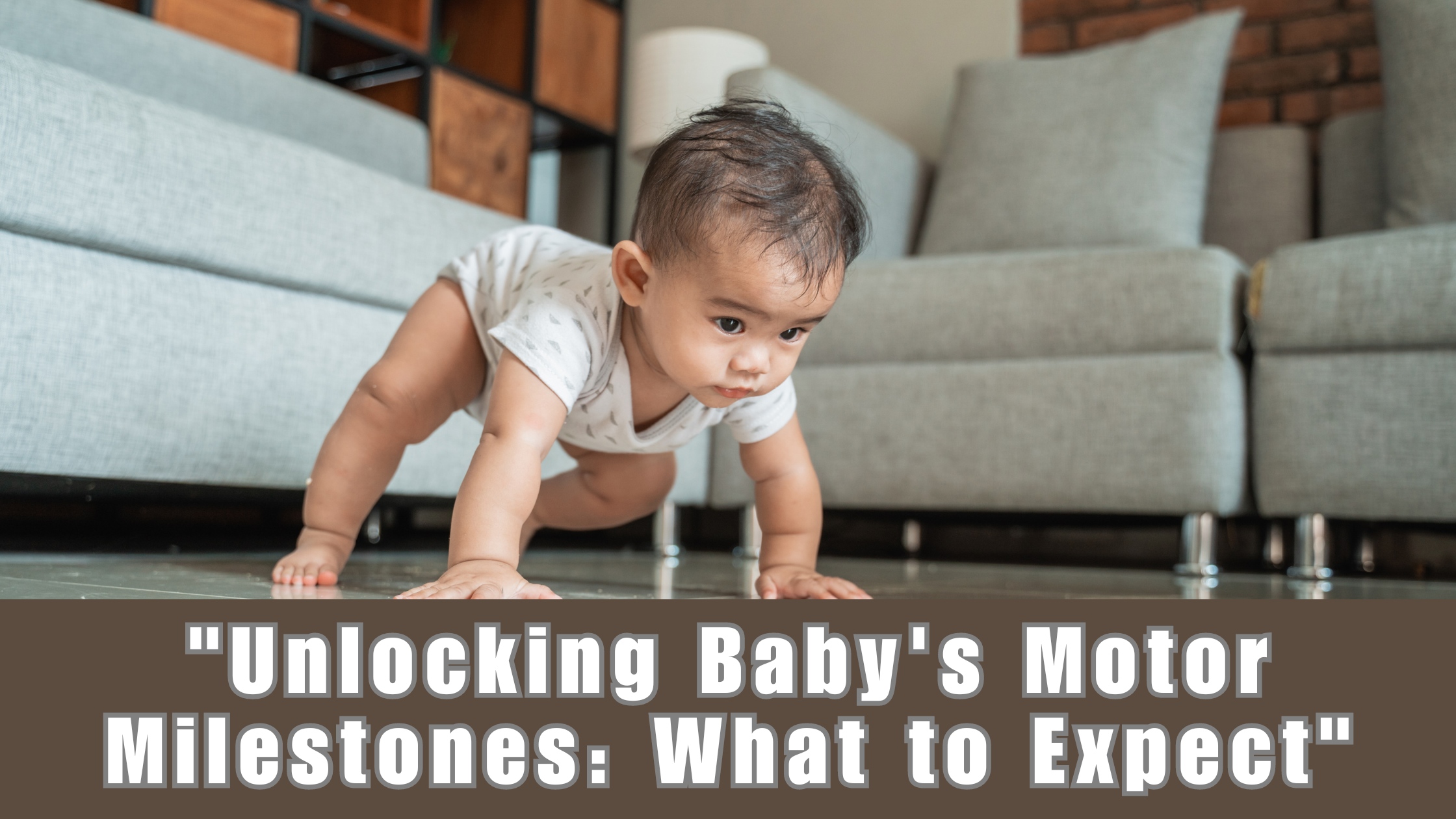
Around seven to nine months, many babies begin to explore mobility through crawling. This stage is characterized by increased curiosity and independence as babies venture further away from caregivers to explore their surroundings. Crawling helps babies develop strength in their arms and legs and improves their coordination and balance.
During this stage, babies also begin to pull themselves up to a standing position using furniture or other objects for support. This marks the beginning of vertical mobility and sets the stage for future milestones like cruising Unlocking baby’s motor milestones (walking while holding onto furniture) and eventually walking independently.
Months 10-12: Standing and First Steps
In the final months of the first year, babies may achieve significant milestones such as standing independently and taking their first tentative steps. This stage represents a major leap in motor development as babies gain more control over their balance and coordination.
Standing independently requires strength in the legs and core muscles, as well as coordination between different muscle groups to maintain balance. Taking those first steps involves a complex interplay of motor skills, including weight shifting, leg coordination, and spatial awareness.
Encouraging Motor Development
As a parent or caregiver, there are many ways you can support and encourage your baby’s motor development:
- Tummy Time: Place your baby on their stomach for short periods throughout the day to help them develop strength in their neck and upper body muscles.
- Provide Opportunities for Movement: Create a safe and stimulating environment where your baby can move freely and explore their surroundings.
- Offer Age-Appropriate Toys: Provide toys and objects that encourage reaching, grasping, and manipulating with hands and fingers.
- Encourage Exploration: Allow your baby to explore different textures, surfaces, and objects to stimulate their senses and encourage movement.
- Be Patient and Supportive: Celebrate your baby’s efforts and progress, even if they don’t achieve milestones on the typical timeline. Every baby develops at their own pace, and it’s essential to provide support and encouragement along the way.
Signs of Delayed Development
While every child develops at their own pace, it’s essential to be aware of potential signs of delayed motor development. Some red signs to look out for include:
- Consistent Failure to Reach Milestones: If your baby consistently fails to achieve motor milestones within the expected timeframe, it may indicate a developmental delay.
- Asymmetrical Movements: If you notice that your baby favors one side of their body over the other or demonstrates asymmetrical movements, it could be a sign of underlying issues such as muscle weakness or tightness.
- Stiffness or Floppiness: Extreme stiffness or floppiness in your baby’s muscles may indicate neurological or muscular disorders that require evaluation by a healthcare professional.
If you have concerns about your baby’s motor development, it’s essential to discuss them with your pediatrician. Early intervention is key in addressing any developmental delays and providing appropriate support and resources for your baby’s needs.
Celebrating Progress
It’s worth celebrating every developmental milestone your baby reaches. Whether it’s their first successful roll, sitting up independently, or taking those wobbly first steps, every achievement represents significant progress in their development journey.
As a parent or caregiver, take the time to acknowledge and praise your baby’s efforts, no matter how small. Unlocking baby’s motor milestones positive reinforcement and encouragement play a crucial role in building your baby’s confidence and motivation to continue exploring and learning new skills.
Remember, every step forward is a testament to your baby’s growth and development, and celebrating their achievements helps create a supportive and nurturing environment for their ongoing development.
Conclusion
Unlocking your baby’s motor milestones is an incredible journey filled with excitement, wonder, and growth. By understanding the progression of motor development, providing support and encouragement, and celebrating each achievement, you can help set the stage for your baby’s future success and independence.
As you embark on this journey with your little one, cherish each moment and embrace the joy of watching them learn, grow, and explore the world around them. Your love, guidance, and support are essential ingredients in nurturing your baby’s development and helping them reach their full potential.